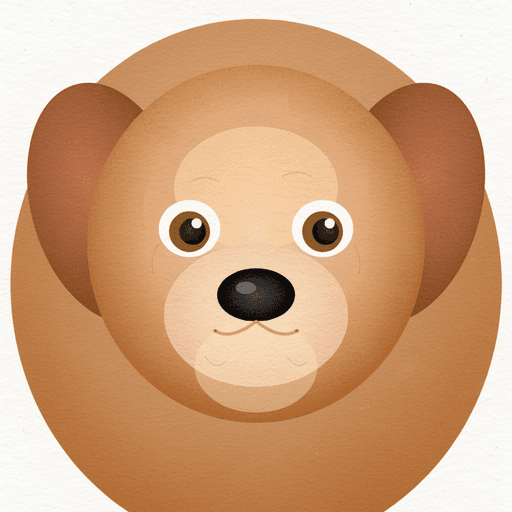
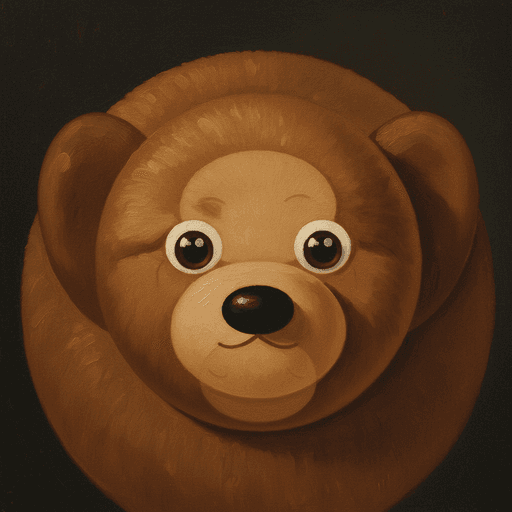
A custom oil painting of your dog or cat is the most traditional way to commit a pet to canvas. Oil portraiture has been the language of formal likeness for five hundred years — the medium that painted nobility, statesmen, and the family dogs that sat at their feet. Used for a pet today, it carries that same weight without irony. The depth of color, the way light pools on a forehead or a chest, the substance of brushwork that you can almost feel from across the room: these are qualities a photograph cannot replicate. An oil pet portrait is for owners who want their animal treated as a serious subject, rendered in a medium that has earned its seriousness.
The visual language
The visual language
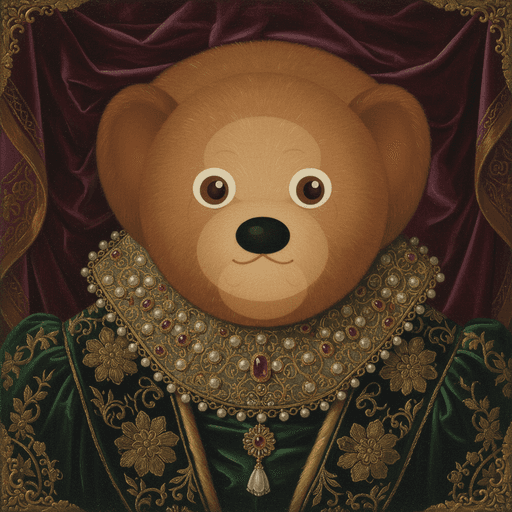
Our oil painting style sits in the Flemish-and-Dutch portrait tradition — think of the chiaroscuro of Rembrandt, the warm honey tones of Vermeer's interiors, the assured wet-on-wet brushwork of John Singer Sargent in his American portrait period. Lighting is single-source and dramatic, almost always coming from the upper left, modeling the subject with a strong falloff into shadow on the opposite side. Backgrounds are deep — burgundy, forest green, umber, occasionally a near-black — and rendered as soft atmospheric gradients rather than literal walls or rooms.
Brushwork is varied and visible. Fur is built up in directional strokes that follow the actual growth of the coat. Highlights on the eye, nose, and whisker pads use thicker impasto-style paint that catches light differently from the surrounding canvas. Edges range from sharp at the focal points of the face to softer at the periphery, pulling the viewer's eye exactly where a trained portraitist would put it. The palette favors warm earth tones — raw sienna, burnt umber, ivory black, lead white, rose madder — over modern bright pigments. Color saturation is rich but never neon, and the surface texture is preserved so the finished portrait reads as paint on a surface rather than a digital image of paint.
Best pets for this style
Best pets for this style
Oil painting is the right style for pets with presence. The dramatic lighting and rich palette reward animals whose coats have depth, structure, or contrast — long fur layered with light, dark coats with sheen, faces with strong features. Short-haired dogs with sculptural musculature also do beautifully in oil because the lighting models their form like a figure study. The style is less forgiving than watercolor on very small, very young, or unusually featureless subjects, where the drama can read as overdressed.
- Golden retrievers, where the long honey coat picks up the warm side-lighting like a Sargent portrait
- Black Labradors, Rottweilers, and Doberman Pinschers — dark coats become luminous against deep backgrounds
- German shepherds and Belgian Malinois, whose alert profile and tonal coats suit single-source lighting
- Great Danes, Mastiffs, and other large breeds whose scale matches the formality of the medium
- Bulldogs and Bullmastiffs — every wrinkle and jowl renders with sculptural depth
- Maine Coons and Persian cats, whose long dense coats read as layered impasto
- British shorthairs and Russian Blues, where the plush solid coat takes the warm portrait light beautifully
- Older, gray-muzzled dogs whose dignity the oil style honors without softening
Where this style hangs best
Where oil painting hangs best in a home
An oil portrait wants a wall with some commitment. Deep paint colors — forest green, oxblood, navy, charcoal — flatter it; so do wood-paneled studies, libraries, dining rooms, and the wall above a fireplace. The dark background of the painting echoes the dark walls and lets the subject pop forward. In a lighter room, the portrait still works but benefits from a heavier frame to give it weight: an ornate gilt frame for a traditional reading, a deep walnut or ebonized wood frame for a more restrained one. Hang it alone, slightly above eye level, with breathing room on either side. The oil style does not want to be one of nine pieces in a gallery wall. It wants to be the piece you look at. Pair it with leather furniture, an antique rug, hardback books, or a brass picture light. The portrait will set the tone for the whole room.
How we make it
How we make it
Each oil painting portrait is generated by an AI model trained on the classical portrait canon — Flemish masters, Dutch Golden Age, the British and American grand-portrait traditions — then narrowed by prompt engineering tuned specifically to preserve pet anatomy. Likeness is the bottleneck, so it is the first thing we lock down. The model receives your photograph and is instructed to treat the head shape, eye spacing, coat color, and any white-on-chest or facial markings as fixed. The oil painting language — brushwork, lighting, palette, background — is applied around those locked features rather than over them. Outputs that fail an automated likeness check are sent for human curation before they ship. Around one in ten portraits gets a manual review.
Upload a clear photo, get a preview in roughly thirty seconds, and only pay if the portrait holds up. Digital download is $6, museum-grade fine-art prints start at $16, and a framed print in a deep wood frame ships for $79 inside the United States. The work is AI-assisted, human-curated styles. That is the honest description.
Common questions
How is this different from a real oil painting commission?
A commissioned oil portrait from a working pet portraitist runs $400 to $3,000 depending on size, canvas count, and the artist's reputation, with a wait of one to four months. The artist sits with reference photos, often a video call, and paints the portrait by hand on stretched linen. Our oil painting portrait is not that. It is a digitally generated portrait in the oil painting visual language, printed on heavyweight archival paper with the texture of the medium preserved. The aesthetic is the same family; the object is different. We are upfront about that. If you want a one-of-one signed oil with the artist's hand visible at close range, commission an artist. If you want a striking, framed, museum-grade piece in your home this week for the cost of dinner, our format was built for that.
Does oil painting work for white dogs and white cats?
Yes — and arguably better than watercolor does. The dark backgrounds of the oil style throw white coats into high contrast, and the warm side-lighting models them with shadow tones in cream, ivory, and rose rather than letting them go flat. Great Pyrenees, Samoyeds, white shepherds, Persian cats, and Turkish Angoras all photograph beautifully in oil. The key, as always, is a source photo that lights the white coat without blowing it out — diffused window light or open shade outdoors is ideal.
Can I choose the background color?
We do not offer per-order background selection at the preview stage — the model picks the background tone that complements your pet's coat using a palette logic built into the prompt system. Most warm-coated pets land on burgundy, oxblood, or warm umber. Dark-coated pets often land on forest green or deep teal. Light-coated pets tend toward charcoal or muted navy. If you generate a preview and want a different background tone, you can request a revision before purchase and we will regenerate with a directed palette shift.
What does the framed print actually look and feel like?
The framed print is a giclée fine-art print on heavyweight archival paper, framed behind glazing in a solid wood moulding — deep walnut or black depending on the portrait's tonal balance — with a clean mat around the image. It arrives ready to hang with hardware attached. The matte archival surface suits the oil style: it reads as a painted artwork rather than a glossy photograph. The standard size is 8×10, with 12×16 and 18×24 available at additional cost.
Will the brushwork look real up close?
Up close, the portrait reads as a high-resolution rendering of oil paint rather than literal physical paint. Brushstroke direction, edge softness, and highlight thickness are all rendered into the image, and at the printed scale they hold up to normal viewing distance — a foot or two away. If you look closely you will see that it is a print, not a hand-painted original. We do not claim otherwise. Across a room, in a frame, the distinction disappears. That is what most people want from a pet portrait.
If you have a clear, well-lit photo, you can see what your pet looks like in the oil painting style in about thirty seconds. The free preview generates a full portrait before you commit to anything. Most owners know immediately whether the painting captures their dog or cat — and if it does not, you walk away owing nothing.